
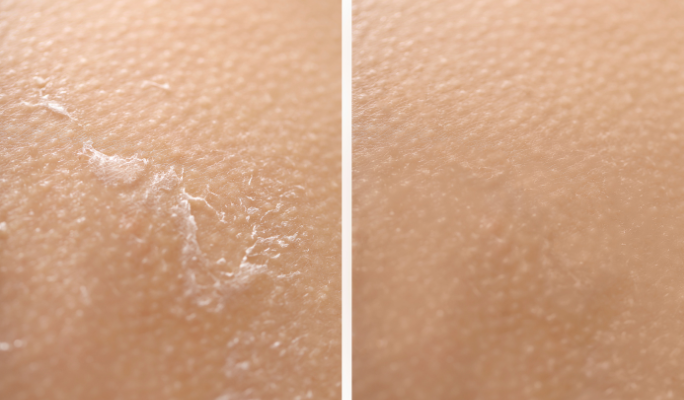
You slather on the thickest, heaviest moisturizing cream you can find every single night, but by midday, your face feels tight, tight, and completely stripped of moisture. Why is your expensive skincare routine failing you?
The answer usually lies in a massive medical misunderstanding: you are treating your skin for the wrong condition.
In the beauty world, people use the terms «Dry Skin» and «Dehydrated Skin» interchangeably. However, to a dermatologist, these are two entirely different biological problems that require completely different treatments.
If you use products meant for dry skin on a face that is actually just dehydrated, you will likely trigger massive acne breakouts without fixing the underlying tightness. Here is the Folime skincare guide to understanding the crucial difference between the two, and exactly how to fix your complexion.
What is Dry Skin? (A Lack of Oil)
Dry skin is a genetic skin type. You are usually born with it, just like some people are born with oily or combination skin.
If you have dry skin, your sebaceous glands are biologically underactive. This means your face simply does not naturally produce enough sebum (oil) to keep your skin lubricated. Because you lack this natural oil, your skin’s protective lipid barrier is constantly compromised.
The Warning Signs of Dry Skin:
- Your skin feels rough, slightly scaly, or flaky to the touch all year round.
- Your pores are almost invisibly small.
- You rarely, if ever, experience acne breakouts or shiny oil on your T-zone (forehead and nose).
- Your skin drinks up heavy, thick creams instantly.
How to Fix Dry Skin
Because dry skin lacks oil, you must manually give it oil! You cannot fix dry skin by just splashing water on it. You need rich, heavy skincare products known as emollients and occlusives to artificially rebuild the lipid barrier.
- The Ingredients to Look For: Shea butter, ceramides, squalane, jojoba oil, and rosehip oil.
- The Routine: Wash your face with a gentle, milky cleanser (never a foaming gel). Apply a thick, lipid-rich moisturizer twice a day. At night, seal your entire routine with a few drops of a pure facial oil to trap the moisture in.
What is Dehydrated Skin? (A Lack of Water)
Dehydrated skin is a temporary skin condition. It can happen to absolutely anyone, regardless of whether your genetic skin type is dry, normal, or extremely oily!
Dehydration means your skin cells are severely lacking water inside them. This is usually caused by external lifestyle factors: drinking too much caffeine, blasting the air conditioning or central heating, taking incredibly hot showers, or over-exfoliating your face with harsh acids that damage your moisture barrier.
The Warning Signs of Dehydrated Skin:
- Your skin feels incredibly tight and «pulled,» but when you touch it, it doesn’t necessarily feel rough or flaky.
- It looks dull, grey, and completely lacks a healthy «glow.»
- Fine lines and wrinkles suddenly look much deeper and more exaggerated.
- The Paradox: Your skin feels tight, but it is simultaneously producing massive amounts of oil, leading to severe acne breakouts! (Your skin is overproducing oil to overcompensate for the lack of water).
How to Fix Dehydrated Skin
Because dehydrated skin lacks water (not oil), applying a heavy, thick butter cream will just clog your pores and cause massive acne breakouts! You need lightweight, water-binding ingredients known as humectants.
- The Ingredients to Look For: Hyaluronic Acid, Glycerin, Aloe Vera, and Snail Mucin. These ingredients act like microscopic sponges, pulling water directly from the air into your skin cells.
- The Routine: The absolute secret to fixing dehydration is how you apply your products. You must apply your Hyaluronic Acid serum to a damp face. If you apply it to a dry face, the acid will actually pull the remaining water out of your deep skin layers, making the dehydration worse! After washing your face, leave the water on your skin, pat in your hydrating serum, and immediately seal it with a lightweight, water-based gel moisturizer.
The «Pinch Test» to Find Out Which One You Have
If you are still confused, you can do a quick physical test at home.
Gently pinch a small section of skin on your cheek or the back of your hand, hold it for three seconds, and release.
- If the skin snaps back perfectly into place immediately, but it feels rough, scaly, and constantly flakes off on your black clothes, you have Dry Skin.
- If the skin you pinched takes a few seconds to slowly deflate and flatten back down (like a deflated balloon) and looks crinkled like crepe paper, you have Dehydrated Skin.
💡 A Hydration Tip from the Folime Team:
The absolute best way to fix dehydrated skin doesn’t happen in the bathroom; it happens in the kitchen! Skincare products can only do so much from the outside. You must hydrate your cells from the inside out. Force yourself to drink at least 2 liters of pure water a day, dramatically reduce your alcohol intake, and eat water-rich foods like cucumber and watermelon!
Disclaimer: The information provided in this article by Folime is for educational and cosmetic awareness purposes only. It is not intended as a substitute for professional dermatological advice. If you suffer from chronic skin peeling, severe eczema, or painful acne, consult a board-certified dermatologist.
latest posts published

Footwear Biomechanics: Why ‘Barefoot’ Shoes Are Dominating Modern Streetwear

The Vintage Revival: How to Source and Authenticate High-End Secondhand Fashion

Proportion Play: The Geometric Rules of Styling Oversized Garments Correctly
The Science of Fabric: Why Polyester is Damaging the Skin (And Healthier Alternatives)

Investment Pieces: The 5 Structural Garments Every Professional Wardrobe Requires

Decoding the Dress Code: A Modern Guide to ‘Smart Casual’ for the Hybrid Workplace

The Death of Fast Fashion: Why ‘Cost Per Wear’ is the Only Metric That Matters
Sustainable Fashion: How to Identify ‘Greenwashing’ When Purchasing Apparel

Dopamine Dressing: The Psychological Impact of Color on Daily Productivity