
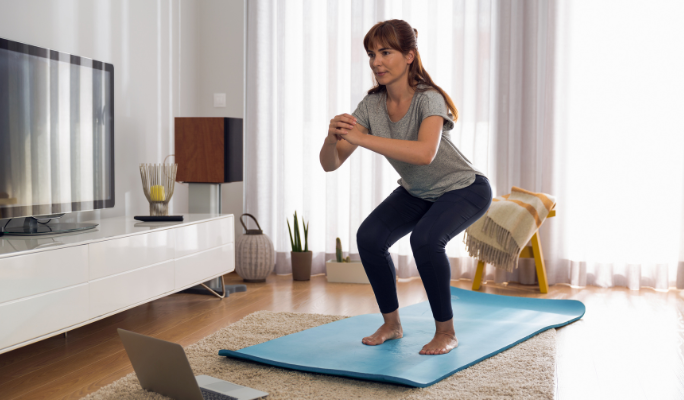
If you are a modern professional, a busy parent, or simply a human being navigating the chaotic pace of the 21st century, you have probably experienced the crushing guilt of the «all-or-nothing» fitness mentality. You tell yourself that you need to drive to the gym, change into athletic gear, suffer through a grueling 60-minute routine, shower, and drive back home.
When you look at your packed calendar and realize that a two-hour window simply does not exist, what do you do? You skip the workout entirely. You tell yourself, «I’ll start again on Monday.» But Monday turns into next month, and eventually, your expensive gym membership becomes nothing more than a monthly tax on your conscience.
I know this cycle intimately because I lived it for years. I believed that if I wasn’t sweating buckets for an hour straight, my physical efforts didn’t count.
But what if everything we were taught about the duration of exercise is fundamentally flawed? What if the secret to metabolic health, cardiovascular longevity, and sustainable fat loss doesn’t require a gym membership, a treadmill, or even a change of clothes?
Welcome to the fitness revolution of 2026. In this comprehensive physiological breakdown by the Folime Fitness Team, we are going to explore the scientifically backed paradigm shift known as «Exercise Snacking» (or micro-workouts). We will uncover the hidden dangers of modern sedentary lifestyles, explain the biological magic of short exercise bursts, and give you a practical blueprint to seamlessly integrate fitness into your daily life without losing a single hour of your precious time.
What Exactly is ‘Exercise Snacking’?
Do not let the playful name fool you; exercise snacking is not a passing social media trend. It is a highly researched methodology rooted in modern sports science and clinical kinesiology.
Exercise snacking refers to the practice of breaking up your daily physical activity into «bite-sized» pieces. Instead of completing one long, continuous session of 45 to 60 minutes, you perform multiple short bursts of vigorous or moderate activity—typically lasting anywhere from one to five minutes—spread evenly throughout your day.
In clinical literature, this is often referred to as VILPA (Vigorous Intermittent Lifestyle Physical Activity). It is the realization that the human body does not own a stopwatch. Your cardiovascular system does not know if you are running on a commercial treadmill or if you are aggressively sprinting up three flights of stairs carrying laundry. It only registers the physiological demand: an increased heart rate, oxygen consumption, and muscle contraction.
To visualize this, imagine two different scenarios:
- Scenario A: You sit frozen in an office chair for 10 hours, then go to the gym and run for 45 minutes.
- Scenario B: You never go to the gym, but every two hours you stand up and do two minutes of jumping jacks, deep squats, or brisk walking.
While Scenario A has been the gold standard for decades, recent physiological data suggests that Scenario B might actually be superior for baseline human health, blood sugar regulation, and joint longevity. To understand why, we have to look at the toxicity of sitting.
The Hidden Danger of the «Active Couch Potato» Syndrome
To fully grasp the power of micro-workouts, you must first understand the devastating effects of prolonged sitting.
The modern economy has engineered movement out of our lives. We sit in our cars to commute, we sit at our desks to work, and we sit on our couches to relax. This has given rise to a dangerous physiological state known as the «Active Couch Potato» syndrome. This term describes individuals who meet the recommended guidelines of 150 minutes of exercise per week, but spend the remaining 70+ hours of their waking life completely sedentary.
Here is the harsh biological reality: a one-hour gym session does not magically immunize you against the damage of sitting motionless for the next 12 hours.
When you sit for extended periods—usually past the 60-minute mark—your body undergoes rapid, negative metabolic shifts.
- Enzyme Shutdown: The production of lipoprotein lipase—a crucial enzyme located in your blood vessels that is responsible for breaking down circulating blood fats (triglycerides)—drops by an astonishing 90%.
- Insulin Resistance: Your muscle cells become «deaf» to insulin. Because they are not contracting, they do not need energy, meaning the sugar from your recent meal stays trapped in your bloodstream, causing damaging glucose spikes.
- Blood Pooling: The lack of muscle contraction in your calves and thighs allows blood to pool in your lower extremities, increasing blood pressure and vascular stress.
This is where exercise snacking becomes a biological superpower. By introducing a 3-minute burst of movement every few hours, you constantly interrupt this sedentary decay. You turn the fat-burning enzymes back on, you clear glucose from the bloodstream, and you force blood to circulate back to your heart.
The Science Behind Micro-Workouts: Why 5 Minutes Actually Works
Skeptics often argue that a 3-minute or 5-minute workout cannot possibly be long enough to induce real physical changes or burn a meaningful amount of calories. However, human biology proves otherwise. When you engage in short, intense bouts of activity, you trigger several powerful physiological mechanisms.
1. EPOC and the ‘Afterburn’ Effect
When you perform a traditional, low-intensity jog, you burn calories while you are jogging, but the calorie burn stops almost the moment you step off the treadmill.
However, if you perform a vigorous 3-minute exercise snack (such as doing burpees, high knees, or fast mountain climbers), you create a sudden and massive demand for oxygen that your lungs cannot immediately meet. This creates an «oxygen debt.»
To repay this debt and return your body to a state of homeostasis, your metabolism has to work overtime for hours after the 3-minute workout is over. This phenomenon is known as EPOC (Excess Post-exercise Oxygen Consumption). If you do four or five of these vigorous exercise snacks throughout the day, you keep your metabolism chronically elevated, burning a significant amount of latent body fat without ever stepping into a gym.
2. The Glucose Sink: Instant Blood Sugar Regulation
Perhaps the most incredible benefit of exercise snacking is its impact on blood sugar. When you eat a meal rich in carbohydrates, your blood glucose levels rise. If those levels spike too high and crash too fast, you experience brain fog, lethargy, and an intense craving for more sugar.
Your muscles act as a sponge for this glucose. When you perform a 5-minute micro-workout (especially involving large muscles like your legs or chest), you activate specific protein receptors in your muscle cells called GLUT4. These receptors rush to the surface of the cell and pull glucose directly out of your bloodstream to use for instant energy, completely bypassing the need for insulin.
A prominent study showed that simply walking briskly for 2 to 5 minutes immediately after a meal drastically reduces post-meal blood sugar spikes compared to sitting down. It is the ultimate hack for diabetic prevention and sustained daily energy.
3. Cumulative Cardiovascular Adaptations
Your heart is a muscle, and it responds to stress by growing stronger and more efficient. Research published in reputable sports medicine journals has demonstrated that «sprint snacks»—such as aggressively climbing a staircase for 60 seconds, three times a day—can increase cardiovascular endurance (VO2 max) by up to 5% over a few weeks.
While 5% may not sound like a massive number to an Olympic athlete, for the average office worker, a 5% increase in cardiorespiratory fitness correlates with a massive reduction in all-cause mortality and heart disease risk.
The Psychological Magic of Shrinking Your Workouts
Beyond the physiological benefits, exercise snacking solves the biggest hurdle in the fitness industry: human psychology.
The primary reason we procrastinate on exercise is the Activation Energy required to start. In physics, activation energy is the minimum amount of energy required to initiate a chemical reaction. In daily life, it is the mental friction of preparing for a massive task. Thinking about a 60-minute workout requires massive activation energy. Your brain perceives it as a threat to your comfort and time, so it creates excuses.
A 5-minute workout requires almost zero activation energy. You do not need to change your clothes, drive your car, or mentally prepare yourself. When you tell your brain, «I am just going to do 20 bodyweight squats next to my desk,» the brain offers no resistance.
Furthermore, every time you successfully complete a micro-workout, your brain releases a small hit of dopamine—the molecule of reward and motivation. By accomplishing multiple «mini-goals» throughout the day, you build a powerful identity as an active person. You stop being someone who wants to exercise and you instantly become someone who does exercise.
How to Build Your Own ‘Exercise Snacking’ Menu (Practical Guide)
The beauty of this framework is its infinite flexibility. You do not need equipment, and you do not need space. You simply need to build a «menu» of movements and deploy them throughout your day.
Here is a highly effective, full-body micro-workout blueprint designed by our team that you can implement tomorrow:
The Morning Wake-Up Snack (Focus: Mobility & Core)
Goal: Lubricate the joints, wake up the central nervous system, and fix sleeping posture.
- Time: 3 to 5 Minutes (Immediately after getting out of bed).
- The Movements:
- 60 seconds of gentle arm circles and torso twists.
- 60 seconds of the «Cat-Cow» yoga stretch to decompress the spine.
- 60 seconds of holding a basic forearm plank to ignite the core.
- 60 seconds of deep bodyweight squats (focusing on depth, not speed, to open the hips).
The Desk-Worker’s Lunch Break Snack (Focus: Blood Flow & Posture)
Goal: Counteract the forward-leaning «tech neck» and pull blood out of the lower legs.
- Time: 3 Minutes (Right before eating your lunch).
- The Movements:
- 60 seconds of Wall Push-ups or Desk Push-ups (engaging the chest and triceps).
- 60 seconds of «Band Pull-Aparts» or imaginary reverse flys (squeezing your shoulder blades together to fix upper back posture).
- 60 seconds of brisk walking in place or high knees to spike the heart rate.
The Evening TV Commercial Snack (Focus: Strength & EPOC)
Goal: Fatigue the large muscle groups to stimulate growth and activate the afterburn effect.
- Time: 5 Minutes (During a commercial break or between streaming episodes).
- The Movements:
- AMRAP (As Many Rounds As Possible) for 5 minutes of:
- 10 Alternating forward lunges (5 per leg).
- 10 Push-ups (on the floor or from the knees).
- 15 Jumping jacks or explosive star jumps.
- Cycle through these three movements continuously until the 5 minutes are up. You will be breathless, sweating, and you will have effectively stimulated full-body muscle maintenance.
Real-World Tips to Make Exercise Snacking an Unbreakable Habit
Information without execution is useless. To ensure you actually perform these micro-workouts consistently, you must tie them to your existing environment using a behavioral psychology tactic called Habit Stacking.
Habit stacking involves attaching a new, desired behavior (the exercise snack) to a deeply ingrained, automatic habit that you already do every single day without fail.
- Example 1: «While my morning coffee is brewing (existing habit), I will do 30 calf raises on the kitchen counter (new habit).»
- Example 2: «Every time I finish a Zoom meeting and close my laptop (existing habit), I will immediately do 15 air squats before leaving the room (new habit).»
- Example 3: «When I brush my teeth at night (existing habit), I will do a wall-sit for 60 seconds (new habit).»
By anchoring the micro-workout to a trigger that already exists, you remove the need for willpower. The environment dictates the action.
Ultimately, the rise of exercise snacking proves a beautiful truth: fitness does not have to be a monumental, agonizing sacrifice of your time. Your body is incredibly resilient and responsive to even the smallest stimulus. By simply choosing to move vigorously for a few minutes, a few times a day, you can entirely rewrite your metabolic health, protect your joints, and reclaim your vitality. Stop waiting for the perfect hour to appear on your calendar. You have five minutes right now. Use them.
Frequently Asked Questions (FAQ)
Does walking up the stairs count as an exercise snack?
Absolutely. In fact, «stair-snacking» is one of the most clinically studied forms of VILPA. Vigorously walking or lightly jogging up 3 to 4 flights of stairs in under 60 seconds is enough to significantly spike your heart rate and improve cardiovascular markers.
Can I actually build muscle with just 5-minute workouts?
Yes, but with a caveat. If you are an advanced bodybuilder, 5 minutes of bodyweight squats will not build new mass. However, if you are a beginner or intermediate, taking your muscles close to failure (where the last few repetitions feel very difficult) during a 5-minute burst will create enough mechanical tension to preserve and build lean muscle tissue.
Do I need to warm up before doing an exercise snack?
For moderate movements (like brisk walking or slow squats), a warm-up is not necessary. However, if your exercise snack involves explosive, high-impact movements (like sprint intervals or box jumps), you should absolutely perform 60 seconds of light dynamic movement (like jogging in place) to lubricate your joints and prevent injury.
💡 A Fitness Tip from the Folime Team:
«To supercharge the metabolic benefits of your micro-workouts, practice ‘Post-Prandial Pacing’. Never sit down immediately after finishing a large meal. Instead, implement a strict rule: within 15 minutes of taking your last bite of food, you must go for a brisk 10-minute walk. This simple intervention leverages your active muscles to drain glucose from your blood, dramatically reducing fat storage, preventing the afternoon energy crash, and aiding in rapid digestion.»
Disclaimer: The information provided in this article by the Folime team is for educational and informational purposes only. It is not a substitute for professional medical advice, diagnosis, or treatment. While micro-workouts are generally safe, always consult with a certified physician or healthcare provider before beginning any new exercise regimen, especially if you have a history of cardiovascular disease, joint issues, or underlying health conditions.
latest posts published
Footwear Biomechanics: Why ‘Barefoot’ Shoes Are Dominating Modern Streetwear

The Vintage Revival: How to Source and Authenticate High-End Secondhand Fashion
Proportion Play: The Geometric Rules of Styling Oversized Garments Correctly
The Science of Fabric: Why Polyester is Damaging the Skin (And Healthier Alternatives)

Investment Pieces: The 5 Structural Garments Every Professional Wardrobe Requires

Decoding the Dress Code: A Modern Guide to ‘Smart Casual’ for the Hybrid Workplace

The Death of Fast Fashion: Why ‘Cost Per Wear’ is the Only Metric That Matters
Sustainable Fashion: How to Identify ‘Greenwashing’ When Purchasing Apparel

Dopamine Dressing: The Psychological Impact of Color on Daily Productivity