
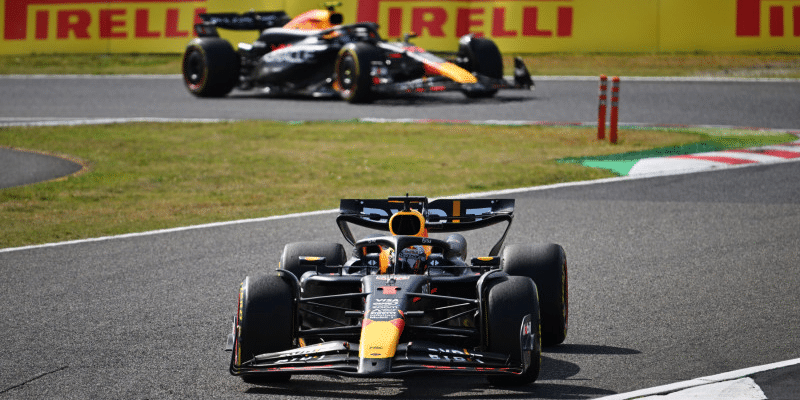
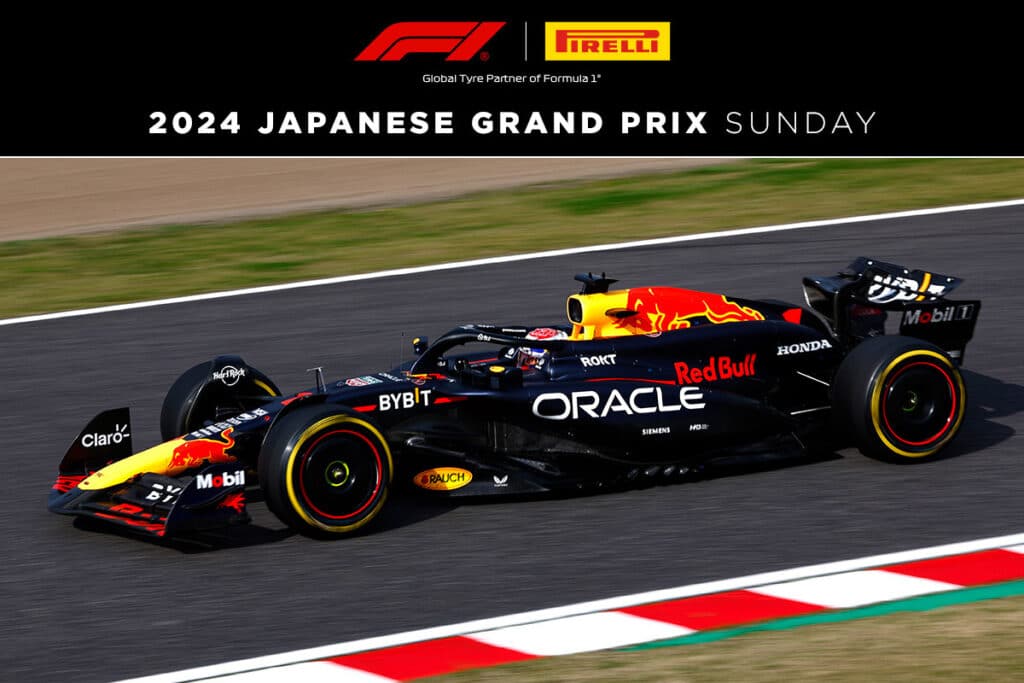
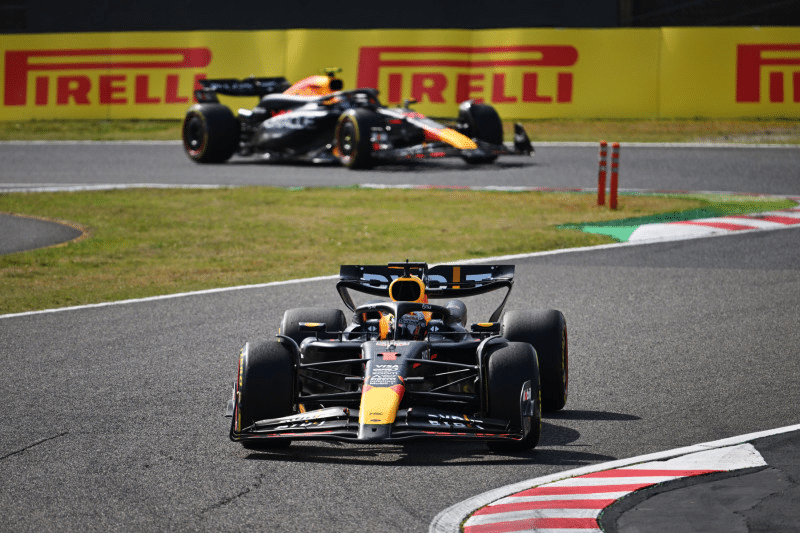
Max Verstappen added another gem to his winning streak with a dominant performance at the Japanese Grand Prix. This was the Dutchman’s third consecutive victory at Suzuka, the 57th of his career. Sergio Perez secured Red Bull’s third double of the season, the 31st in the team’s history.
Carlos Sainz finished third, adding his third podium in as many races this year, after missing the Jeddah race due to appendicitis. It was the 25th podium for Ferrari in the Japanese Grand Prix.
THE DAY ON THE TRACK
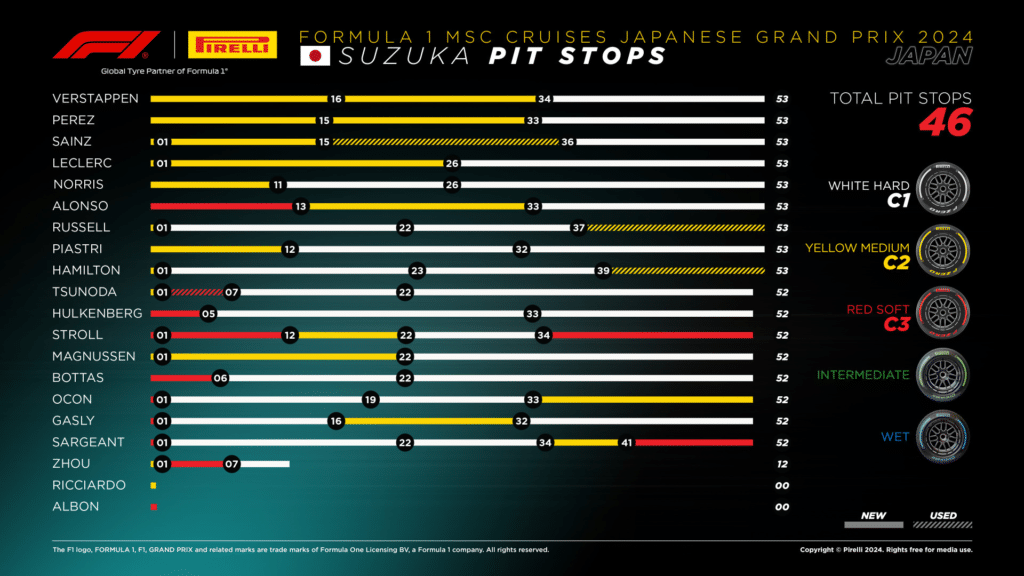
The race started with a fairly even split between the drivers who opted for the Medium compound tires (all those in the top ten, with the exception of Alonso, and Ricciardo, Tsunoda and Zhou) and those who opted for the Softs. However, the red flag on lap one allowed seven drivers – Mercedes and Alpine duos Sargeant, Tsunoda and Zhou – to take the opportunity to change compounds. The Mercedes duo went from Medium to Hard, the Williams duo Alpine and Sargeant went from Soft to Medium, and Tsunoda (Racing Bulls) and Zhou (Sauber) from Medium to Soft.
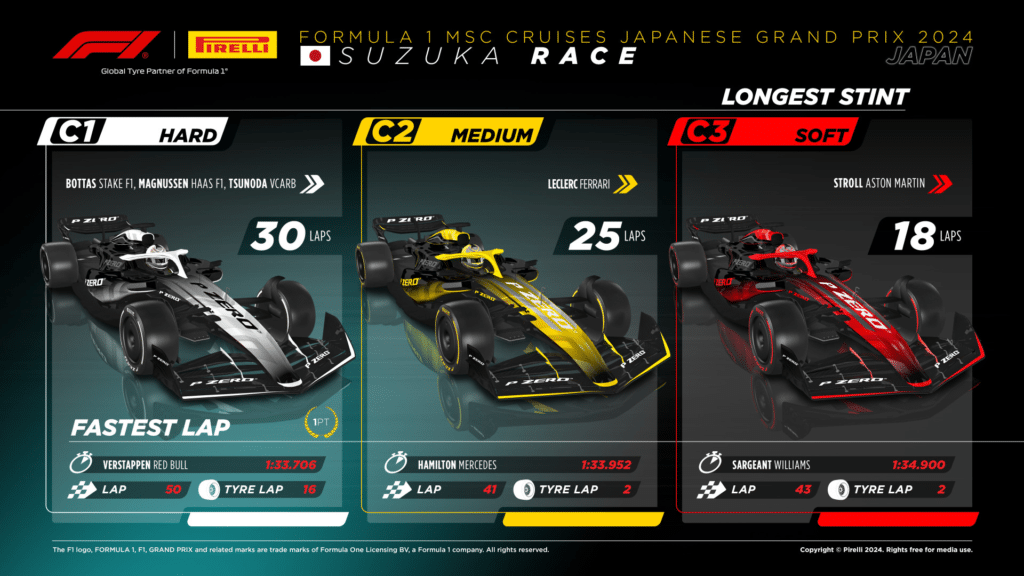
The restart essentially meant shortening the race by two laps. The teams therefore opted for different strategic options, both in terms of number of stops and use of the available compounds. The most used was the C1 (545 laps – 60% of the race), followed by the C2 (281 laps – 31% of the race) without major differences in terms of degradation. The Soft compound (81 laps – 9% of the race total) also had a role to play, both at the start and in the final phase, despite showing considerable degradation.
MARIO ISOLA – PIRELLI MOTORSPORT DIRECTOR
«I think that once again Formula 1 has proven to be a spectacular form of racing. On one of the most demanding tracks for drivers and cars, we witnessed a race with lots of overtaking and different strategies, also thanks to the fact that the three compounds we chose for this round were up to the demands. This allowed the drivers to choose between different options, both in terms of changing compounds and in relation to visits to the pits.

While it is true that, once again, Red Bull and Max Verstappen had an advantage that allowed them to secure victory with relative ease, we witnessed great battles further back, not only on the track, but also between the teams in the pits.
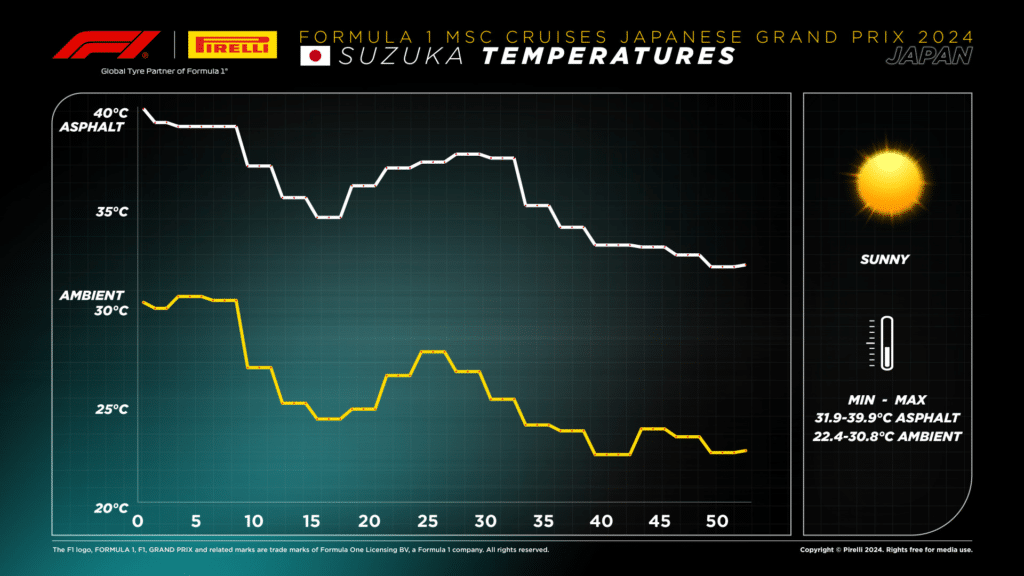
Today was the hottest day of the weekend, with the track reaching a temperature of 40°C at the start of the race and then dropping to 32°C and, therefore, the thermal degradation was notable. Whoever did the best management job managed to conquer several positions: especially Leclerc who had an exceptional race in this respect, because his only stop allowed him to go from eighth to fourth place. The undercut proved to be very effective, but it is a fact that those who stopped too early found themselves at a disadvantage in the final stages of each stint. All these variables created differences in performance that made overtaking easier, which was great for the spectators. Indeed, the fans who flocked to Suzuka all weekend really added to the spectacle and it was fantastic to see them celebrate local idol Yuki Tsunoda’s tenth place finish.»
WHAT’S NEXT FOR OUR TIRES?
Shanghai hosts the fifth stage of the MotoGP World Championship, from 19 to 21 April, after 5 years of absence and 20 years after its first appearance on the calendar in 2004. Shanghai will be the stage for the debut of the new Sprint format (Sprint free practice and qualifying on Friday, Sprint Race and qualifying on Saturday and the actual Grand Prix on Sunday). Pirelli has chosen the three intermediate compounds: C2 (Hard), C3 (Medium) and C4 (Soft).
Later this week, on Tuesday and Wednesday, Suzuka will host the third Pirelli test session of the season, aimed at developing the compounds and constructions for 2025, with Sauber, driven by Valtteri Bottas on both days, and Racing Bulls, with Daniel Ricciardo on the first day and Yuki Tsunoda on the second.
NO MOTORING IN PIRELLI
Founded in 1872, Pirelli is a company with deep Italian roots, recognized throughout the world for its cutting-edge technology, capacity for innovation and the quality of its products. Motorsport has always played an important role in Pirelli’s strategy, with the ‘race to the road’ philosophy. The company has been involved in motorsports for 116 years and today supplies tires to more than 350 two- and four-wheel championships. Pirelli is constantly attentive to the increasingly efficient use of natural resources and energy, with the aim of achieving carbon neutrality by 2030.
Pirelli has been the global tire partner of the FIA Formula 1 World Championship since 2011. The company also supplies other championships, including FIA Formula 2 and Formula 3, the Alpine Formula Regional European Championship, the FIA World Rally Championship and the GT World Challenge, as well as numerous national series.
latest posts published

What is botulism: everything about this dangerous disease

How to clean and care for your baby’s belly button?

How to detect and treat gastroenteritis in children?

At what age do the most common types of cancer appear?

Dyslexia in children: what is it, diagnosis and treatment?

Canker sores in children: symptoms and treatments

7 activities to do during the Christmas holidays with children

Self-employed: how much you will pay to Social Security

Know your rights and responsibilities as a worker