
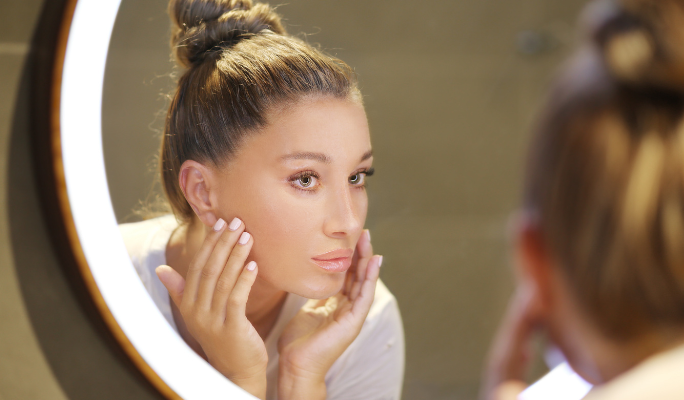
For decades, the beauty industry told women not to worry about «anti-aging» until they saw their first deep wrinkles in their late 40s. Today, the narrative has completely flipped. Fueled by social media panic, teenagers and young adults in their 20s are spending thousands of euros on invasive «preventative» Botox and extremely harsh anti-aging chemical peels.
The truth, as always, lies somewhere in the middle.
Dermatologists agree that the late 20s and early 30s are the absolute most critical years for preserving your skin. Around the age of 25, the body’s natural production of collagen and elastin—the structural proteins that keep your skin plump and tight—begins to slowly decline by about 1% every year.
However, «preventative» skincare does not mean destroying your young skin with harsh chemicals meant for mature skin. If you want to look 30 when you are 50, you must focus on protection and stimulation, not aggressive correction. Here is the Folime guide to what you actually need to do in your 20s and 30s—and what you can completely skip.
What You ACTUALLY Need to Do
1. Defend Against UV Rays (Your #1 Priority)
We will say it again: Sunscreen is the only true anti-aging product. Up to 80% of premature aging (fine lines, sagging, and dark sun spots) is caused by daily, unprotected exposure to UVA rays.
- The Action: In your 20s and 30s, applying a broad-spectrum SPF 30 or 50 every single morning is non-negotiable. If you start wearing sunscreen religiously at 22, you will simply not develop the deep wrinkles at 40 that require expensive lasers to fix.
2. Introduce a Gentle Retinoid
Retinol (a Vitamin A derivative) is the gold standard of anti-aging dermatology. It works by dramatically speeding up cellular turnover and forcing the skin to produce new collagen from the inside out.
- The Action: The late 20s is the perfect time to introduce a low-dose, over-the-counter retinol serum into your nighttime routine. Do not buy the strongest clinical strength available! Start slowly: use a gentle 0.2% or 0.5% retinol just two nights a week. This «trains» your skin to continuously produce collagen without causing severe peeling or chemical burns.
3. Neutralize Free Radicals with Vitamin C
Living in a modern city means your skin is constantly bombarded by free radicals from smog, exhaust fumes, and blue light from screens. These free radicals attack and destroy your healthy collagen cells, causing your skin to sag prematurely.
- The Action: Apply a high-quality Vitamin C serum every morning before your sunscreen. Vitamin C acts as a powerful antioxidant shield, sacrificing itself to neutralize the free radicals before they can damage your skin’s DNA.
4. Hydrate the Eye Area
The skin under your eyes is incredibly thin and lacks oil glands, which is why fine lines usually appear here first (often affectionately called «crow’s feet»).
- The Action: You do not need a €100 «anti-aging» eye cream. You simply need deep hydration. Gently tap a basic, peptide-rich moisturizer or a hyaluronic acid gel under your eyes every night to keep the skin plump and elastic, preventing the thin skin from folding and creasing permanently.
What You Need to SKIP (Save Your Money)
1. «Preventative» Botox in Your Early 20s
The trend of 22-year-olds getting Botox to «prevent» wrinkles from ever forming is highly controversial and often unnecessary. If you have no static wrinkles (lines that remain on your face when it is completely relaxed), paralyzing your facial muscles with a neurotoxin provides very little long-term benefit and can actually lead to muscle atrophy over decades. Save the injectables for your late 30s or 40s when expression lines begin to set in permanently.
2. Physical Face Scrubs
St. Ives Apricot Scrub and other harsh physical exfoliants made of crushed walnut shells or sugar crystals belong in the trash. Scrubbing your face aggressively does not «erase» wrinkles; it creates microscopic tears in the skin barrier, leading to chronic inflammation, which actually accelerates the aging process.
- The Swap: Use a gentle chemical exfoliant (like Lactic Acid or Glycolic Acid) once a week to gently dissolve dead skin cells without the violent friction.
3. Buying Products Meant for 60-Year-Olds
Using incredibly thick, heavy anti-aging creams designed for mature, post-menopausal skin will not make your 28-year-old skin look better. Because young skin still produces plenty of its own natural oils (sebum), applying heavy, lipid-rich mature creams will simply clog your pores and trigger massive acne breakouts. Stick to lightweight, hydrating, barrier-protecting formulas!
💡 A Lifestyle Tip from the Folime Team:
Anti-aging is not just topical; it is cellular. The most expensive creams in the world cannot undo the cellular damage caused by smoking cigarettes, eating a diet entirely based on refined sugar, or getting only 4 hours of sleep a night. Drink water, eat your antioxidants, manage your stress, and wear your SPF!
Disclaimer: The information provided in this article by Folime is for educational and cosmetic awareness purposes only. It is not intended as a substitute for professional dermatological advice. If you are pregnant or breastfeeding, please consult your doctor, as Retinol products are strictly prohibited during pregnancy.
latest posts published

Footwear Biomechanics: Why ‘Barefoot’ Shoes Are Dominating Modern Streetwear

The Vintage Revival: How to Source and Authenticate High-End Secondhand Fashion

Proportion Play: The Geometric Rules of Styling Oversized Garments Correctly
The Science of Fabric: Why Polyester is Damaging the Skin (And Healthier Alternatives)

Investment Pieces: The 5 Structural Garments Every Professional Wardrobe Requires

Decoding the Dress Code: A Modern Guide to ‘Smart Casual’ for the Hybrid Workplace

The Death of Fast Fashion: Why ‘Cost Per Wear’ is the Only Metric That Matters

Sustainable Fashion: How to Identify ‘Greenwashing’ When Purchasing Apparel

Dopamine Dressing: The Psychological Impact of Color on Daily Productivity