

Car sales declaration: how to fill out the document?
Fill in the registration data, make and chassis number (information available on the registration document –
Since you want to use the application as a vehicle sales declaration, select the “Ownership Registration Declaration (Verbal Contract of Sale)” option.
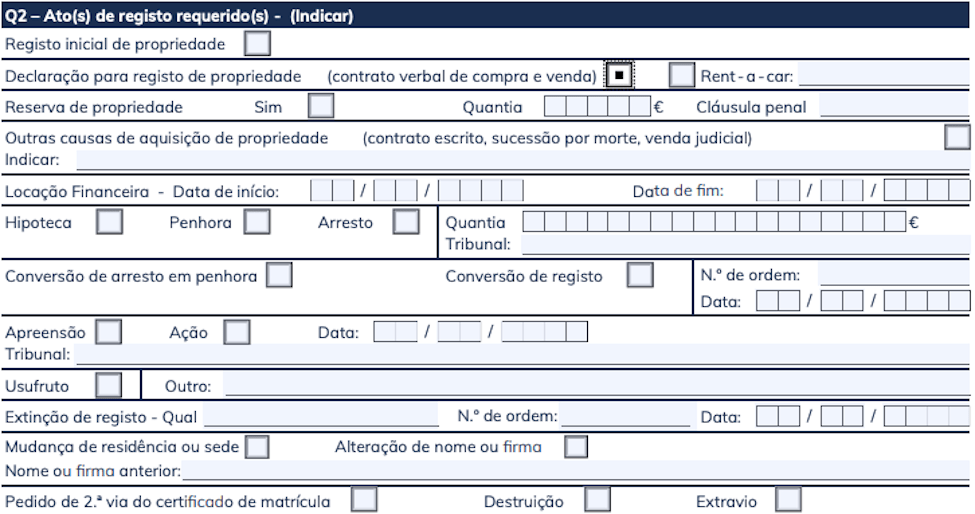
Fill in these points with information relating to the active subject (buyer) and the taxable subject (seller).
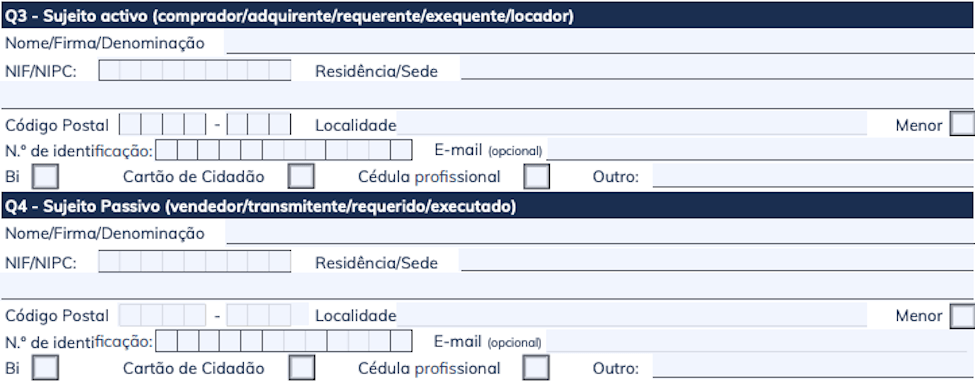
If you wish to include a user of the vehicle who is not the owner (such as your son, daughter or other person), also fill in the field point six, “User”.

The seller must select the first option and enter the contract date.

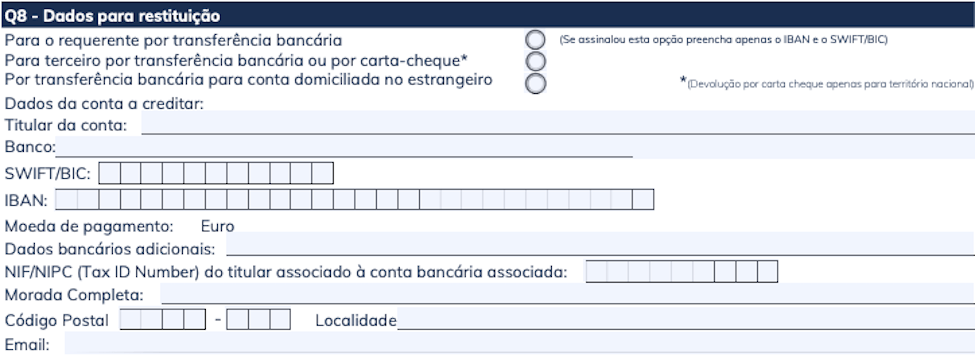
This point is filled in by the buyer. Here you will need to enter your bank details to receive any refunds in the event that your application is not accepted.
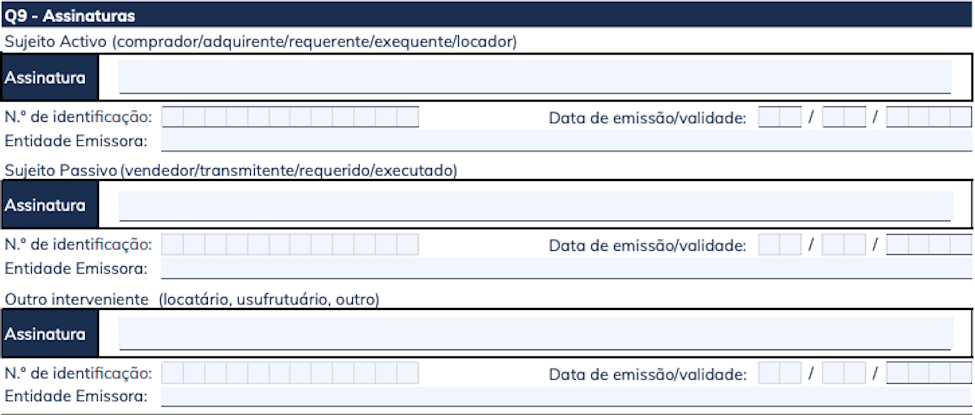
Finally, both the buyer and seller must sign the application.
> In person
The offices of the Institute of Registry and Notary or Lojas do Cidadão provide the service within 60 days of signing the contract.
To do this, you must bring with you the vehicle registration application (which serves as the declaration of sale of the vehicle), the registration document (Documento Único Automóvel) and the identification document.
> Online
Also know that this process can also be done online, via the Automóvel Online website, with a 15% discount. To do this, both the buyer and the seller must hold a Citizen Card with a digital certificate.
The order is placed by the buyer and subsequently confirmed by the seller. If it is necessary to attach scanned documents, the request must be made by a lawyer, notary or solicitor.
What is the deadline for car registration and how much does it cost?
To obtain a vehicle sales declaration, the buyer must register within 60 days of concluding the contract. If you register your car in person, at the IRN or at a Citizen’s Store, you will have to pay €65. If you do it via Automóvel Online the cost will be €55.30.
What happens if the buyer does not register the property within 60 days?
When the buyer registers 60 days after the date of the sale, he will have to pay a penalty equal to the fee. Meaning what:
- €130 (€65+€65) if registration is done in person;
- €120.30 (€55.30+€65), if done online.
If registration is not carried out, the seller will continue to be required to pay the Single Car Tax. Why? Because the car remains in your name. You can also be informed, for example, of traffic violations and unpaid tolls.
For these situations, the «special procedure for registering ownership of vehicles acquired through a verbal sales contract» has been established, pursuant to Legislative Decree 177/2014. This allows the seller to register the property in favor of its current owner.
For this purpose it is necessary to present documents certifying the purchase and sale, such as invoices, receipts, cash sales or other settlement documents, which include the vehicle registration number, the name and address of the seller and the buyer. Furthermore, it is important that the seller has a copy of the vehicle registration application used as a declaration of sale of the vehicle.
As for costs, €75 if you order in person or €63.75 if you order online. The buyer is notified and has 15 days to file an objection, dispute some mentions or regularize the situation. If the new owner requests the registration card, he will have to pay €95 (in person) or €80.75 (online).
What about car insurance?
Do you need car insurance or are you going to buy new one? Discover the solutions that General Peace of mind has for you and choose the coverage that best suits your life.
latest posts published

Footwear Biomechanics: Why ‘Barefoot’ Shoes Are Dominating Modern Streetwear

The Vintage Revival: How to Source and Authenticate High-End Secondhand Fashion

Proportion Play: The Geometric Rules of Styling Oversized Garments Correctly

The Science of Fabric: Why Polyester is Damaging the Skin (And Healthier Alternatives)

Investment Pieces: The 5 Structural Garments Every Professional Wardrobe Requires

Decoding the Dress Code: A Modern Guide to ‘Smart Casual’ for the Hybrid Workplace

The Death of Fast Fashion: Why ‘Cost Per Wear’ is the Only Metric That Matters

Sustainable Fashion: How to Identify ‘Greenwashing’ When Purchasing Apparel

Dopamine Dressing: The Psychological Impact of Color on Daily Productivity