
Hearing a doctor diagnose your child with pneumonia is a terrifying moment for any parent. Globally, pneumonia is the leading infectious cause of death among children under five years old. However, there is a crucial silver lining: the vast majority of these severe cases can be entirely prevented if the illness is identified and treated early.
Early diagnosis of childhood pneumonia is absolutely essential to prevent complications and avoid stressful hospitalizations. But how do you tell the difference between a normal winter cold and a dangerous lung infection?
In this comprehensive guide by the Folime health team, we will teach you how to identify the first hidden symptoms of pneumonia, explain the standard medical treatments, and share the most effective techniques to protect your child’s lungs from an early age.
What is Childhood Pneumonia?
Simply put, childhood pneumonia is an acute respiratory infection that affects the lungs. It can be caused by bacteria, viruses, or (more rarely) fungi.
When a healthy baby inhales, their lungs fill with clean air. However, if they inhale harmful pathogens through their nose or throat, those germs can travel down into the respiratory tract and cause acute inflammation of the lung tissue. The tiny air sacs inside the lungs (alveoli) become filled with pus and fluid. This fluid severely limits the body’s ability to absorb oxygen, giving rise to a cascade of dangerous symptoms.
- Viral Pneumonia: Usually causes milder symptoms that appear gradually over a few days. While uncomfortable, viral pneumonia often resolves on its own with rest and supportive care.
- Bacterial Pneumonia: This is significantly more serious and progresses very quickly. The child will suddenly become visibly ill, lethargic, and the symptoms are much more severe. It requires immediate medical intervention.
The Most Common Symptoms: What Parents Should Look For
Because young children cannot always articulate how they feel, you must be a detective. The symptoms of pneumonia can vary depending on the child’s age and the germ causing the infection, but you should look out for:
- Rapid, Labored Breathing: Watch your child’s bare chest. If they are breathing much faster than normal, or if their stomach muscles are sinking in deeply under their ribs with every breath (retractions), this is a major warning sign.
- A Persistent Cough: Often producing green, yellow, or bloody mucus.
- High Fever and Chills: A sudden spike in temperature accompanied by shivering.
- Loss of Appetite: In infants and toddlers, the very first symptom is often a sudden refusal to eat or drink.
- Wheezing or Grunting: Depending on the germ contracted, breathing may produce high-pitched hissing sounds.
- Chest or Abdominal Pain: Older children may complain that it hurts to cough or take a deep breath. Because the lower lungs sit right above the stomach, toddlers often complain of a «tummy ache.»
- Extreme Prostration: The child is unusually limp, exhausted, and shows zero interest in playing.
How is it Diagnosed?
If you suspect pneumonia, do not wait. Take your child to a pediatrician immediately.
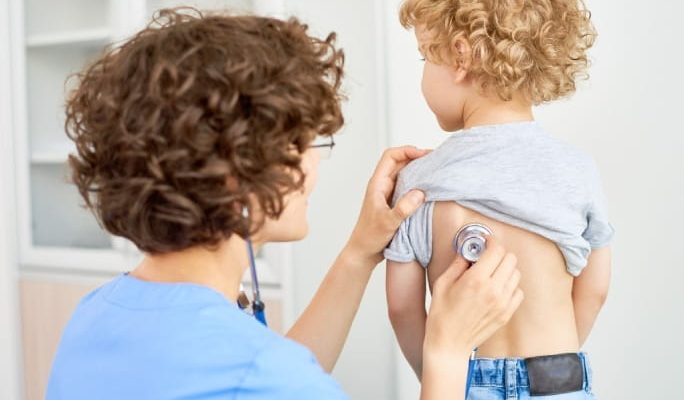
To diagnose pneumonia, the doctor will first perform a thorough physical exam. They will check your child’s overall appearance, measure their breathing rhythm, and use a stethoscope to listen to the lungs for crackling or bubbling sounds.
If a more precise diagnosis is needed to determine the severity, the doctor will likely order a chest X-ray to visually confirm the fluid in the lungs, and blood tests to identify whether the infection is viral or bacterial.
(Folime Tip: Having private family health insurance allows for much greater speed in scheduling these urgent X-rays and receiving blood results without waiting in crowded public emergency rooms).
How is Childhood Pneumonia Treated?
The treatment for pneumonia depends entirely on what caused it. Never give your child leftover antibiotics without a doctor’s explicit order.
- For Bacterial Pneumonia: The doctor will prescribe a strict course of oral antibiotics (such as Amoxicillin). It is critical that your child finishes every single dose of the medication, even if they seem completely better after two days. Stopping early can cause the bacteria to return stronger.
- For Viral Pneumonia: Antibiotics do not kill viruses. Treatment focuses on rest and relieving symptoms. The doctor will recommend pediatric Paracetamol or Ibuprofen to reduce the fever.
- At-Home Care for Both: Keep the child highly hydrated (water, breastmilk, or clear broths) to help thin out the mucus in their lungs. Using a cool-mist humidifier in their bedroom can also make breathing much easier.
- When is Hospitalization Required? If the child is under 6 months old, is severely dehydrated, requires supplemental oxygen to breathe, or if the infection has spread to the bloodstream, they will need to be admitted to the hospital for intravenous (IV) antibiotics and close monitoring.
5 Proven Ways to Prevent Childhood Pneumonia
Can you protect your child from getting this infection? Yes! The best defense is a strong offense.
1. Keep Vaccinations Up to Date
Vaccination is undeniably the most effective way to prevent childhood pneumonia. The National Vaccination Program provides several essential vaccines that protect against the exact viruses and bacteria that cause severe pneumonia, including the Pneumococcal conjugate vaccine (PCV), Haemophilus influenzae type b (Hib), Whooping Cough (Pertussis), and Measles. Do not neglect your child’s vaccination schedule!
2. Strict Hygiene Habits
Studies show that children under 5 who are taught to wash their hands regularly with soap and water have a 50% lower incidence of pneumonia. Teach them to wash their hands immediately after coming home from school or the playground, and strictly avoid sharing cutlery or drinking glasses.
3. Eliminate Secondhand Smoke
It is an absolute rule: no child should ever be near tobacco smoke. Secondhand smoke severely damages the tiny, hair-like structures (cilia) inside a child’s respiratory system that are designed to sweep away germs. Being around tobacco smoke drastically increases a child’s risk of developing lung infections.
4. Prioritize Breastfeeding
If possible, exclusive breastfeeding for at least the first 6 months of life is highly recommended. Breast milk is packed with the mother’s natural antibodies, acting as an incredible «protective shield» that strengthens the newborn’s immune system against respiratory illnesses.
5. Improve Indoor Air Quality
Do not trap stale, germ-filled air inside your house! Even during the winter, open your windows for at least 15 minutes a day to ventilate the rooms. This small daily gesture dramatically improves indoor air quality and reduces the concentration of airborne viruses.
Disclaimer: The information provided in this article by Folime is for educational and informative purposes only and does not substitute for professional medical diagnosis or treatment. If your child is struggling to breathe, has blue-tinged lips, or is completely unresponsive, seek emergency medical care immediately.
latest posts published

Footwear Biomechanics: Why ‘Barefoot’ Shoes Are Dominating Modern Streetwear

The Vintage Revival: How to Source and Authenticate High-End Secondhand Fashion
Proportion Play: The Geometric Rules of Styling Oversized Garments Correctly
The Science of Fabric: Why Polyester is Damaging the Skin (And Healthier Alternatives)

Investment Pieces: The 5 Structural Garments Every Professional Wardrobe Requires

Decoding the Dress Code: A Modern Guide to ‘Smart Casual’ for the Hybrid Workplace

The Death of Fast Fashion: Why ‘Cost Per Wear’ is the Only Metric That Matters
Sustainable Fashion: How to Identify ‘Greenwashing’ When Purchasing Apparel

Dopamine Dressing: The Psychological Impact of Color on Daily Productivity