
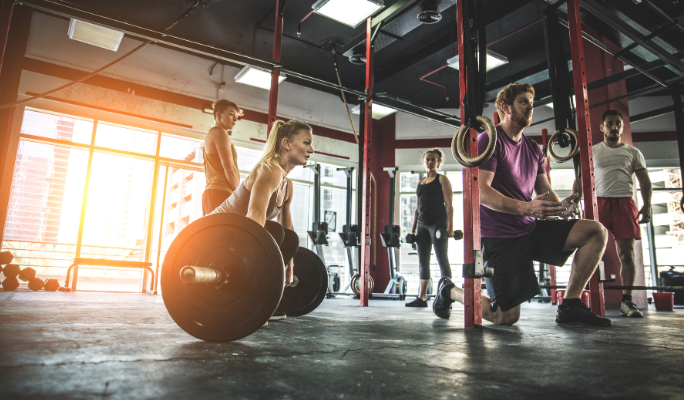
It is a highly documented occurrence in the fitness industry: a new member drives to a commercial gym, parks the car, looks through the glass windows at the crowded weight room, and experiences a sudden, overwhelming spike in heart rate. Convinced that stepping inside will result in public embarrassment or harsh judgment, the individual puts the car in reverse and returns home without ever walking through the front doors.
This phenomenon is not a reflection of weakness or a lack of willpower. It is a recognized psychological barrier commonly referred to as Gymtimidation (Gym Intimidation).
The fear of looking foolish, using complex machinery incorrectly, or being judged by fitness veterans is the primary reason millions of individuals abandon their physical health goals before they even begin. However, public fitness spaces belong to everyone, regardless of their current physical condition. In this comprehensive behavioral guide, the Folime Fitness Team explores the cognitive illusions that trigger gym anxiety, the reality of weight room sociology, and a clinical framework for novice lifters to confidently claim their space.
The Cognitive Psychology Behind Gym Anxiety
To dismantle the fear of the weight room, one must first understand how the human brain processes vulnerable environments. When an individual steps into an unfamiliar, highly populated territory, the amygdala (the brain’s threat-detection center) goes on high alert.
The Spotlight Effect
The core driver of gymtimidation is a well-documented cognitive bias known as the Spotlight Effect. Because human beings process the world from their own singular perspective, the brain naturally assumes that surrounding individuals are paying close attention to their actions, mistakes, and physical flaws.
When a novice picks up a dumbbell for the first time, the Spotlight Effect creates the illusion that the entire facility is actively watching and evaluating their form.
The clinical reality is profoundly liberating: the weight room is inherently a narcissistic ecosystem. The vast majority of gym-goers are hyper-focused on their own physical reflections, monitoring their own resting periods, and listening to loud audio through noise-canceling headphones. The perceived «spotlight» does not exist. An individual struggling with a new exercise is essentially invisible to the rest of the room.
The Imposter Phenomenon in Physical Spaces
Imposter Syndrome is frequently discussed in corporate environments, but it manifests aggressively in fitness centers. Beginners often feel they have not «earned» the right to use the heavy free-weight section, assuming that space is exclusively reserved for elite athletes or bodybuilders. This creates an artificial hierarchy where novices relegate themselves to the hidden corners of the cardio section, severely limiting their physical progression.
The Intervention: A ‘Graduated Exposure’ Protocol
Telling an anxious individual to simply «be brave» is a clinically ineffective strategy. In behavioral psychology, phobias and anxieties are treated through Graduated Exposure—the process of slowly introducing the nervous system to the feared environment in highly controlled, manageable doses.
For overcoming gymtimidation, sports psychologists and trainers recommend the following exposure timeline:
Phase 1: Environmental Reconnaissance (The Safe Zone)
The fastest way to trigger a panic attack is to walk into the center of a crowded free-weight floor without a destination. To prevent this, the first few visits to a new gym should involve zero pressure to perform heavy lifting.
- The Objective: The individual should immediately navigate to a «Safe Zone,» typically a treadmill in the back row of the cardio section.
- The Execution: By walking at a slow pace for 20 minutes, the individual is not trying to burn calories; they are performing reconnaissance. From the safety of the treadmill, the brain can passively observe the environment. The individual learns where the water fountains are, observes how members wipe down machines, and maps out the layout of the facility. This familiariation rapidly de-escalates the nervous system’s threat response.
Phase 2: The Scripted Mission (Eliminating Decision Fatigue)
Anxiety thrives in the space of uncertainty. Wandering aimlessly from machine to machine trying to decide what to do leaves an individual feeling lost and highly exposed.
- The Objective: Never cross the threshold of the gym without a rigid, written plan.
- The Execution: Prior to leaving the house, the individual must write an exact workout sequence in a notebook or smartphone. (Example: 10 minutes on the elliptical, 3 sets of machine chest presses, 3 sets of goblet squats). When a strict plan is in place, the individual transforms from a wandering novice into someone executing a mission. If a desired machine is occupied, the plan dictates simply moving to the next item on the list, preventing any moments of frozen hesitation.
Phase 3: The Micro-Commitment Clause
The anticipation of a grueling, hour-long workout often creates an insurmountable psychological wall.
- The Objective: Lower the biological barrier to entry by removing the pressure of time.
- The Execution: The individual must make a micro-commitment: «I am only required to stay inside the gym for 15 minutes. Once 15 minutes have passed, I have full permission to leave with zero guilt.» By removing the pressure of a massive workout, crossing the front door becomes mentally effortless. In clinical practice, once the initial 15-minute friction is overcome, the anxiety dissipates, and the individual naturally chooses to complete the full workout.
Understanding Weight Room Sociology
Much of gymtimidation stems from a fundamental misunderstanding of weight room culture. The individuals who appear the most intimidating—the massive powerlifters grunting in the corner—are statistically the most supportive demographic in the facility.
Heavy resistance training requires immense discipline and failure. Elite lifters understand the vulnerability required to step into a gym, and they possess a deep, unspoken respect for anyone attempting to improve their physical health, regardless of the weight on the bar. If a novice ever requires a «spotter» (someone to ensure safety during a heavy lift) or advice on how to adjust a complicated machine, asking the most experienced person in the room will almost always result in an enthusiastic and helpful response.
Frequently Asked Questions (FAQ)
What is the proper etiquette if someone is using the equipment an individual needs?
Gym etiquette relies on direct, polite communication. It is entirely acceptable to approach the person using the equipment and ask, «Excuse me, how many sets do you have left?» This establishes a boundary. The current user will either state their remaining time or offer to let the waiting individual «work in» (alternate using the machine during rest periods).
Is it better for beginners to start with fixed machines or free weights?
For those experiencing severe gym anxiety, fixed selectorized machines (where the weight is adjusted with a pin) are highly recommended for the first month. Machines have a very low learning curve, provide printed instructions directly on the equipment, and physically guide the user through the correct range of motion, completely removing the fear of «doing it wrong.»
💡 A Fitness Tip from the Folime Team:
«If navigating a crowded weight room floor remains too overstimulating, novice lifters should utilize the ‘Single Dumbbell Island’ technique. Rather than walking back and forth across the facility to use different equipment, the individual should select one single pair of moderately heavy dumbbells and claim a quiet, 3-by-3 foot space in the corner of the room. A devastatingly effective, full-body workout (comprising goblet squats, overhead presses, and Romanian deadlifts) can be executed entirely within this isolated square, drastically reducing social exposure while building foundational strength.»
Disclaimer: The psychological concepts and fitness frameworks discussed in this article by the Folime team are for educational and self-improvement purposes only. If an individual experiences severe, paralyzing social anxiety, panic attacks, or agoraphobia that prevents them from engaging in daily activities, it is strongly advised to consult a licensed mental health professional or clinical psychologist.
latest posts published

Footwear Biomechanics: Why ‘Barefoot’ Shoes Are Dominating Modern Streetwear

The Vintage Revival: How to Source and Authenticate High-End Secondhand Fashion
Proportion Play: The Geometric Rules of Styling Oversized Garments Correctly

The Science of Fabric: Why Polyester is Damaging the Skin (And Healthier Alternatives)
Investment Pieces: The 5 Structural Garments Every Professional Wardrobe Requires

Decoding the Dress Code: A Modern Guide to ‘Smart Casual’ for the Hybrid Workplace

The Death of Fast Fashion: Why ‘Cost Per Wear’ is the Only Metric That Matters
Sustainable Fashion: How to Identify ‘Greenwashing’ When Purchasing Apparel
Dopamine Dressing: The Psychological Impact of Color on Daily Productivity