
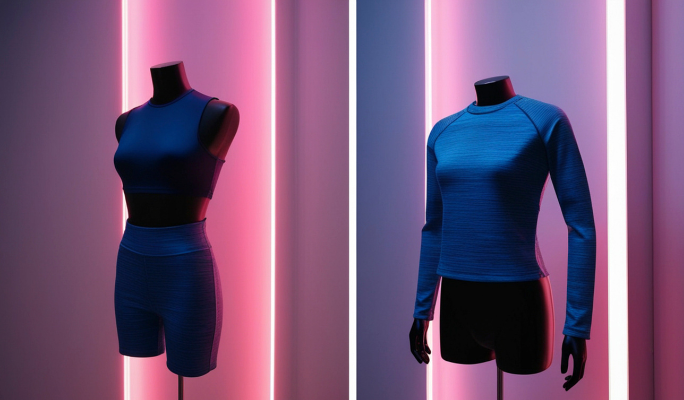
For thousands of years, the primary function of clothing has remained exactly the same: to protect our bodies from the elements and to cover us up. We used cotton to stay cool, wool to stay warm, and leather to stay dry.
But what if your clothing could do more? What if your jacket could monitor your heart rate, or your gym t-shirt could automatically lower your body temperature when you start sweating?
This is no longer science fiction. Welcome to the era of Smart Fabrics (also known as E-textiles or Wearable Technology). The global fashion industry is undergoing a massive technological revolution. By weaving micro-sensors, conductive threads, and highly advanced synthetic fibers directly into our everyday garments, clothing is becoming an active, intelligent part of our lives.
Here is the Folime guide to the incredible smart fabrics that are actively changing the way we dress, work out, and live.
1. Temperature-Regulating «Phase Change» Fabrics
We have all experienced the discomfort of walking outside in a heavy winter coat, stepping onto a crowded, heated subway, and immediately starting to sweat uncontrollably.
How technology fixed it: Scientists have developed «Phase Change Materials» (PCMs). Originally developed by NASA to protect astronauts from extreme temperature fluctuations in space, these microcapsules are now woven into everyday winter jackets and athletic wear.
When your body temperature rises and you start to sweat, the fabric physically absorbs and stores your excess body heat, actively cooling you down. When you step back out into the freezing cold, the fabric releases that stored heat back into your body, keeping you perfectly insulated. It is essentially a wearable thermostat!
2. Self-Cleaning and Anti-Odor Textiles
Washing your clothes constantly is terrible for the environment and slowly destroys the fabric. But what if your clothes literally cleaned themselves?
How technology fixed it: Fabric engineers are now embedding microscopic silver ions and copper nanoparticles directly into the weave of t-shirts, socks, and activewear. These heavy metals possess naturally powerful antimicrobial properties.
When you sweat during a heavy workout, the bacteria that normally cause that terrible «gym bag odor» cannot survive on the silver-infused fabric. You can wear a silver-infused athletic shirt for five rigorous gym sessions without washing it, and it will still smell completely fresh. This technology is revolutionizing sustainable fashion by drastically reducing water consumption from daily laundry.
3. Biometric Activewear (The Invisible Smartwatch)
Forget strapping a bulky, uncomfortable smartwatch to your wrist. The future of fitness tracking is completely invisible.
How technology fixed it: Companies are now creating «smart shirts» and sports bras woven with conductive metallic threads. These microscopic threads act as physical sensors that sit directly against your skin. While you run or lift weights, the fabric itself tracks your heart rate, your respiratory volume, and even your muscle exertion in real-time. A tiny, removable Bluetooth module clipped to the collar of the shirt transmits all this massive biometric data instantly to your smartphone app, offering elite-level athletic analysis without any bulky hardware.
4. UV-Blocking and Skin-Caring Clothes
Applying sunscreen is vital, but standard summer clothing offers surprisingly little protection against the sun. A standard white cotton t-shirt only provides an SPF (Sun Protection Factor) of about 5, allowing dangerous UVA rays to penetrate directly to your skin.
How technology fixed it: The fashion industry has developed UPF (Ultraviolet Protection Factor) clothing. By altering the microscopic weave of the fabric and treating it with specialized UV-absorbing dyes, companies create lightweight, breathable summer shirts and beachwear that offer a permanent UPF of 50+.
Even more impressively, some luxury loungewear brands are now weaving marine collagen and hyaluronic acid microcapsules into their silk pajamas. As you sleep, the friction of your body against the fabric gently bursts the capsules, continually moisturizing your skin throughout the night!
5. Shape-Memory Alloys (No More Ironing)
Ironing is universally considered one of the most tedious household chores. Traveling with a crisp button-down shirt usually results in unpacking a wrinkled disaster.
How technology fixed it: Enter «Shape-Memory» fabrics. By blending traditional cotton with advanced synthetic polymers (like Nitinol), engineers have created clothing that literally «remembers» its original shape. If the shirt gets crushed in your suitcase, the simple application of your natural body heat when you put it on causes the fibers to instantly snap back into their smooth, perfectly pressed structure. You look impeccably tailored without ever touching an iron.
💡 A Sustainable Fashion Tip from the Folime Team:
While smart fabrics offer incredible convenience, they do pose a challenge for recycling at the end of their lifespan due to the mix of electronics and textiles. When purchasing wearable tech or silver-infused activewear, look for brands that offer dedicated «Take-Back» or recycling programs to ensure these complex materials don’t end up polluting landfills!
Disclaimer: The information provided in this article by Folime is for educational and technological awareness purposes only. For specific athletic training or medical monitoring, always consult with a certified professional or your primary care physician.
latest posts published

Footwear Biomechanics: Why ‘Barefoot’ Shoes Are Dominating Modern Streetwear

The Vintage Revival: How to Source and Authenticate High-End Secondhand Fashion
Proportion Play: The Geometric Rules of Styling Oversized Garments Correctly
The Science of Fabric: Why Polyester is Damaging the Skin (And Healthier Alternatives)

Investment Pieces: The 5 Structural Garments Every Professional Wardrobe Requires

Decoding the Dress Code: A Modern Guide to ‘Smart Casual’ for the Hybrid Workplace

The Death of Fast Fashion: Why ‘Cost Per Wear’ is the Only Metric That Matters
Sustainable Fashion: How to Identify ‘Greenwashing’ When Purchasing Apparel
Dopamine Dressing: The Psychological Impact of Color on Daily Productivity