
You finally close your laptop after a long, grueling day of work. You walk into the kitchen, open the refrigerator, and stare blankly at the shelves. Your partner walks in and asks a seemingly innocent question: «What do you want to do for dinner tonight?»
Suddenly, that simple question feels like a monumental, impossible math problem. You feel a surge of irrational irritation. You do not want to cook, you do not want to choose a restaurant, and you certainly do not want to scroll through a delivery app. You just want someone else to make the choice for you.
If you have ever felt this paralyzing exhaustion at the end of the day, you are not lazy, and you are not in a bad mood. You are suffering from a clinically recognized psychological condition known as Decision Fatigue.
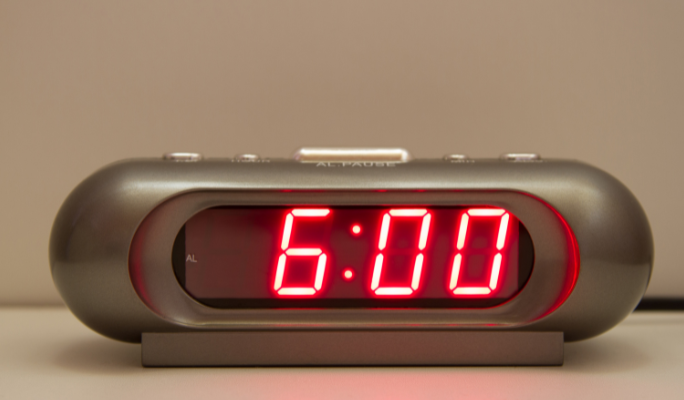
It is a phenomenon that affects everyone from exhausted parents to Fortune 500 CEOs. In this comprehensive neurological breakdown by the Folime Mindset Team, we are going to explore why your brain literally runs out of fuel by 6:00 PM, how this invisible drain is sabotaging your health and finances, and the exact frameworks you can use to protect your mental battery.
The Neurology of «Ego Depletion»
To understand why you feel paralyzed in the evening, you must first understand how your brain processes choices.
Think of your willpower and decision-making capacity as the battery on your smartphone. You wake up in the morning fully charged at 100%. However, every single choice you make—no matter how big or small—consumes a percentage of that battery.
The area of your brain responsible for logical thinking, impulse control, and complex choices is the Prefrontal Cortex. Here is the biological catch: your prefrontal cortex does not differentiate between massive life choices and trivial daily habits. Deciding whether to fire an underperforming employee takes energy, but so does deciding whether to wear a blue shirt or a black shirt. Choosing to invest in a new stock takes energy, but so does deciding whether to order a latte or an Americano.
Psychologists refer to the draining of this mental energy as Ego Depletion. Every day, the average adult makes an estimated 35,000 remotely conscious decisions. By the time evening rolls around, your prefrontal cortex is completely depleted.
The Two Dangerous Defaults of a Tired Brain
When your mental battery drops to 5% in the evening, your brain enters survival mode. To conserve whatever energy is left, it defaults to one of two destructive behaviors:
1. Reckless Impulsivity
When the prefrontal cortex goes offline, your impulse control vanishes. This is the exact reason why supermarkets place candy bars right at the checkout register. By the time you have made hundreds of micro-decisions navigating the aisles (comparing prices, checking ingredients, picking brands), your decision fatigue is peaking. You no longer have the willpower to resist the sugar, so you impulsively buy the chocolate. It is also why the vast majority of junk food consumption and ill-advised online shopping happens after 8:00 PM.
2. Complete Decision Avoidance
The alternative to impulsivity is paralysis. Your brain simply refuses to process any more options. This is why you can spend 45 minutes scrolling through Netflix, watching trailers, and reading descriptions, only to turn the TV off without ever picking a movie. Your brain cannot handle the friction of committing to a choice, so it chooses to do nothing at all.
The Professional Framework to Protect Your Mental Battery
If you want to have energy left over for your family, your hobbies, or your personal goals in the evening, you must ruthlessly eliminate the number of meaningless choices you make during the day. Here is the professional strategy to restructure your environment:
Phase 1: Automate the Mundane
There is a reason why Steve Jobs famously wore the exact same black turtleneck every single day, and why Mark Zuckerberg’s closet is filled with identical gray t-shirts. These highly successful individuals understood that they had a finite amount of daily decision-making power, and they refused to waste it on clothing.
- The Action: You must automate your mornings. You should never have to use your prefrontal cortex before 9:00 AM. Lay out your workout clothes and your work outfit the night before. Eat the exact same breakfast Monday through Friday. By removing just these two choices from your morning routine, you instantly save a massive portion of your cognitive energy for the high-level tasks that actually matter.
Phase 2: Implement «The Frog» Principle
Mark Twain famously said, «If it’s your job to eat a frog, it’s best to do it first thing in the morning.» In productivity psychology, the «frog» is your hardest, most complex task of the day.
- The Action: Because your decision-making battery is at its peak in the morning, you must tackle your most difficult project immediately. Do not check your email first. Do not organize your desk. Do not attend a low-level brainstorming meeting. Use your peak cognitive state to do the heavy lifting, leaving the mindless administrative tasks for the late afternoon when your battery naturally dips.
Phase 3: Transition from a «Maximizer» to a «Satisficer»
There are two types of decision-makers in the world: Maximizers and Satisficers.
Maximizers need to research every possible option before buying a television, booking a hotel, or choosing a restaurant to ensure they make the «perfect» choice. This relentless pursuit of perfection leads to severe decision fatigue.
Satisficers, on the other hand, determine their basic criteria beforehand (e.g., «I need a hotel under $150 a night with free Wi-Fi»). The moment they find the first option that meets that criteria, they book it and move on. They do not care if there might be a slightly better option hidden on page 10 of Google.
- The Action: To protect your peace, become a Satisficer in your personal life. Reserve your intense, maximized decision-making only for the things that truly impact your long-term future (like your career, investments, or health). For everything else, «good enough» is exactly that—good enough.
Frequently Asked Questions (FAQ)
Does eating sugar or drinking coffee cure decision fatigue?
Temporary glucose spikes can provide a very brief boost to willpower, as the brain consumes massive amounts of energy when making choices. However, relying on sugar or caffeine leads to a rapid crash shortly after. The only true cure for ego depletion is deep, restorative sleep.
Is decision fatigue worse for people with ADHD?
Yes. Individuals with Attention-Deficit/Hyperactivity Disorder (ADHD) typically struggle with executive dysfunction. This means their prefrontal cortex has to work significantly harder than a neurotypical brain just to perform basic daily tasks. Consequently, people with ADHD often reach the threshold of decision fatigue much earlier in the day.
How does social media contribute to mental exhaustion?
Scrolling through social media is not a passive activity. Every post you scroll past forces your brain to make a micro-decision: Do I like this? Do I read the caption? Do I watch the whole video? Spending 30 minutes on TikTok or Instagram forces your brain to make hundreds of rapid-fire micro-decisions, rapidly accelerating your daily cognitive drain.
💡 A Mindset Tip from the Folime Team:
«To prevent the dreaded 6:00 PM dinner argument, implement a ‘Rotating Default Menu’. Sit down on a Sunday when your mental energy is high, and assign a specific theme to every day of the week. (e.g., Meatless Monday, Taco Tuesday, Pasta Wednesday, Leftover Thursday). By creating a rigid framework, you completely eliminate the daily burden of choice. You no longer have to decide what to eat; you only have to execute the plan.»
Disclaimer: The psychological concepts discussed in this article by Folime are for educational and self-improvement purposes only. If chronic fatigue, severe brain fog, or an inability to concentrate is severely impacting your daily life or relationships, it may be a sign of underlying medical conditions, clinical burnout, or depression. Please consult a licensed medical professional or therapist for a proper evaluation
latest posts published

Footwear Biomechanics: Why ‘Barefoot’ Shoes Are Dominating Modern Streetwear

The Vintage Revival: How to Source and Authenticate High-End Secondhand Fashion
Proportion Play: The Geometric Rules of Styling Oversized Garments Correctly

The Science of Fabric: Why Polyester is Damaging the Skin (And Healthier Alternatives)

Investment Pieces: The 5 Structural Garments Every Professional Wardrobe Requires

Decoding the Dress Code: A Modern Guide to ‘Smart Casual’ for the Hybrid Workplace

The Death of Fast Fashion: Why ‘Cost Per Wear’ is the Only Metric That Matters
Sustainable Fashion: How to Identify ‘Greenwashing’ When Purchasing Apparel
Dopamine Dressing: The Psychological Impact of Color on Daily Productivity